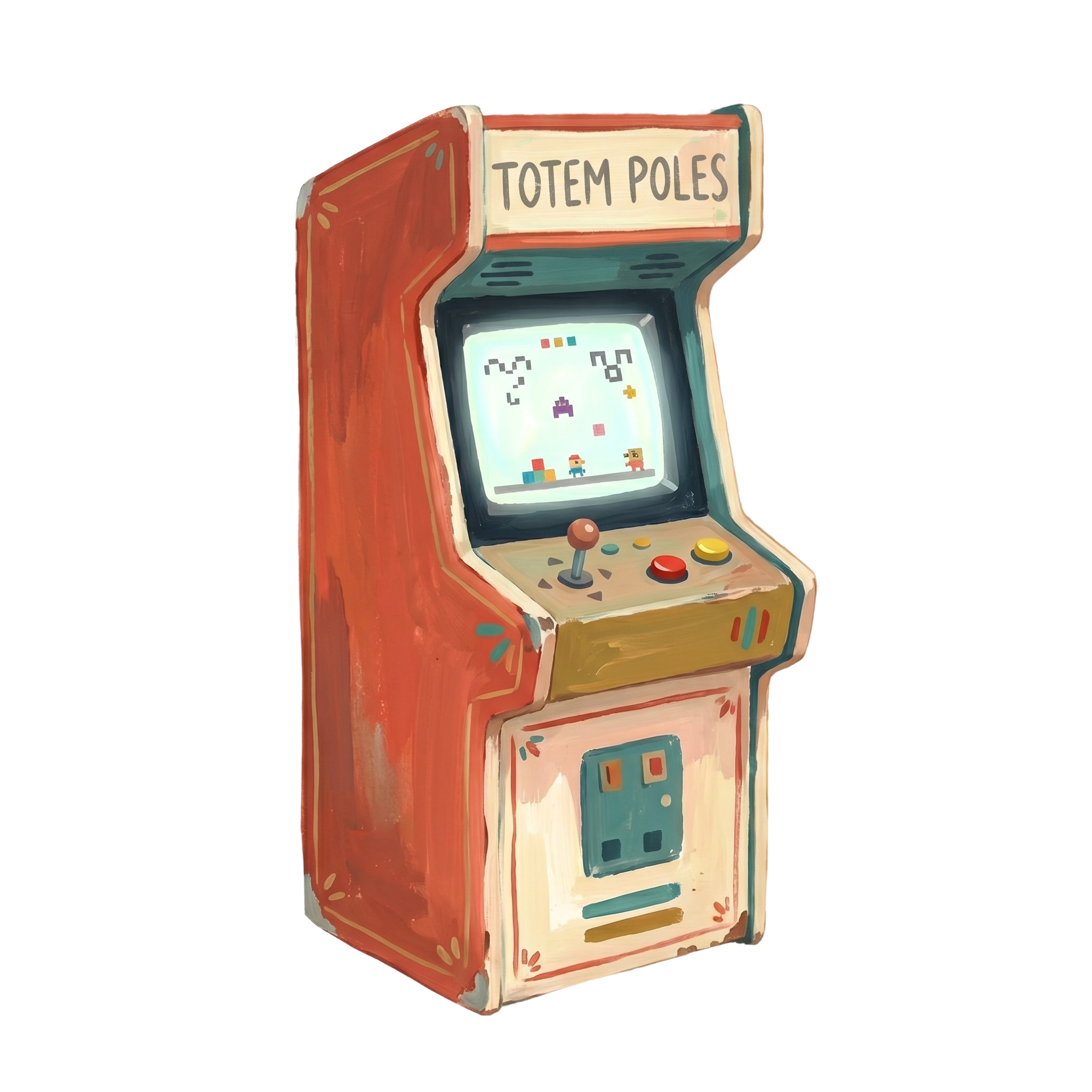
A museum is full of quiet instructions. Don’t touch. Stay behind the line. Read the little card. For a seven-year-old, that’s a lot of no. I watched kids drift past centuries of art looking for something, anything, they were allowed to do. Totem Tales started right there: with a child who wanted to play in a room that only knew how to ask them to read.
00 – The brief
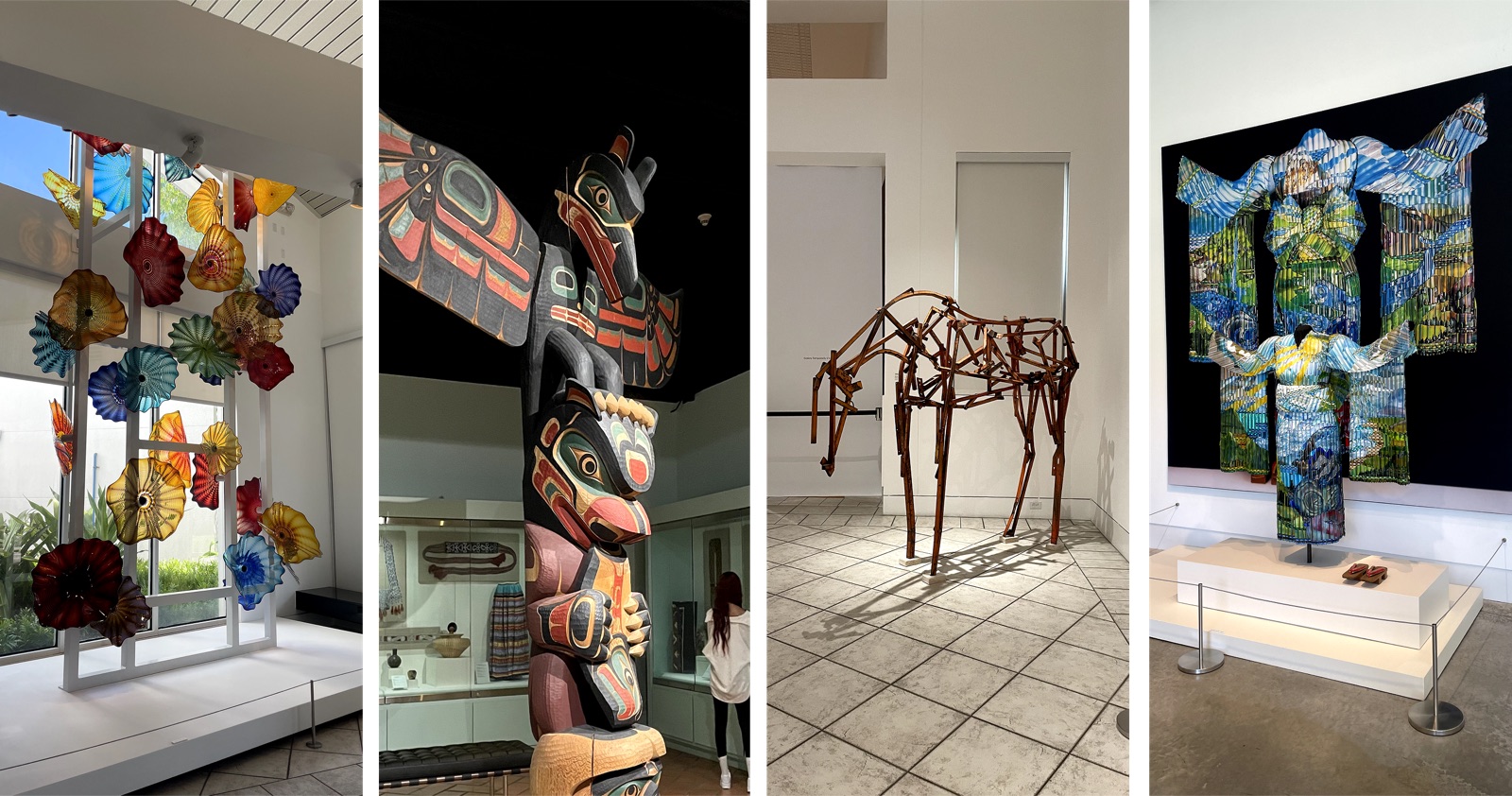
The assignment was wide open: use prototyping and design thinking to make a museum exhibit more engaging. We could build anything, a game, a digital display, a physical object, as long as it deepened how someone experienced the space. I took it to the Lowe Art Museum and went looking for the exact spot where a visitor’s attention quietly went to die.
01 – Research
Walking the museum as a visitor, not a designer
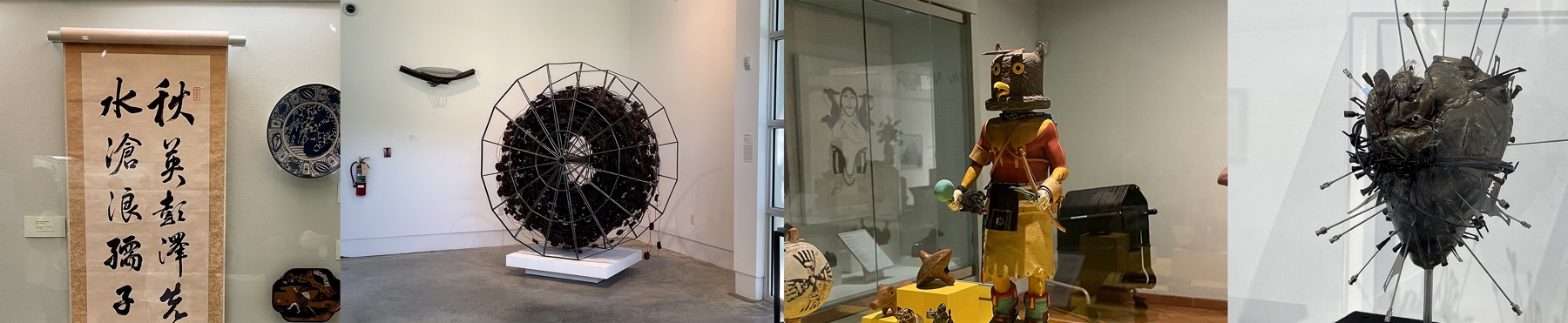
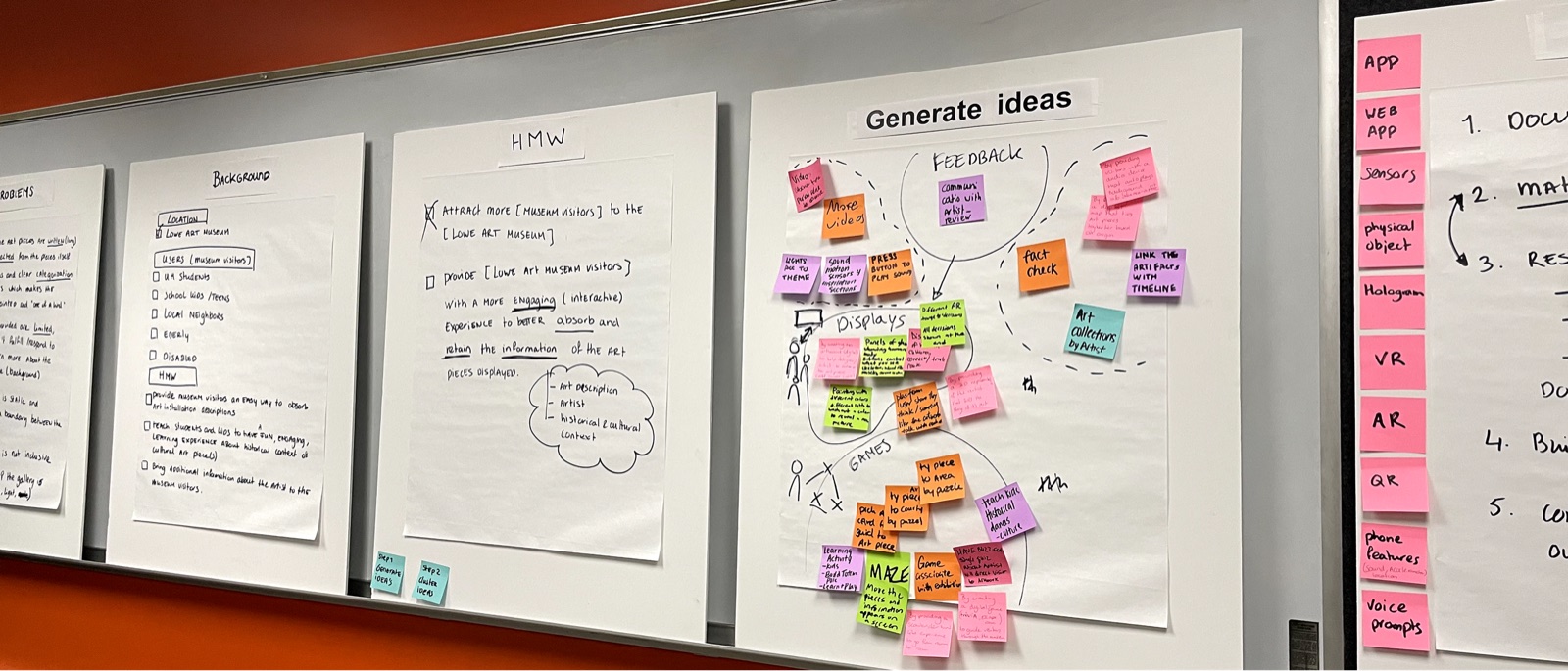
We went through every department slowly, on purpose, noticing where people leaned in and where they reached for their phones. We weren’t measuring anything yet. We were just watching the room breathe, which corners pulled people closer, and which ones they walked straight past.
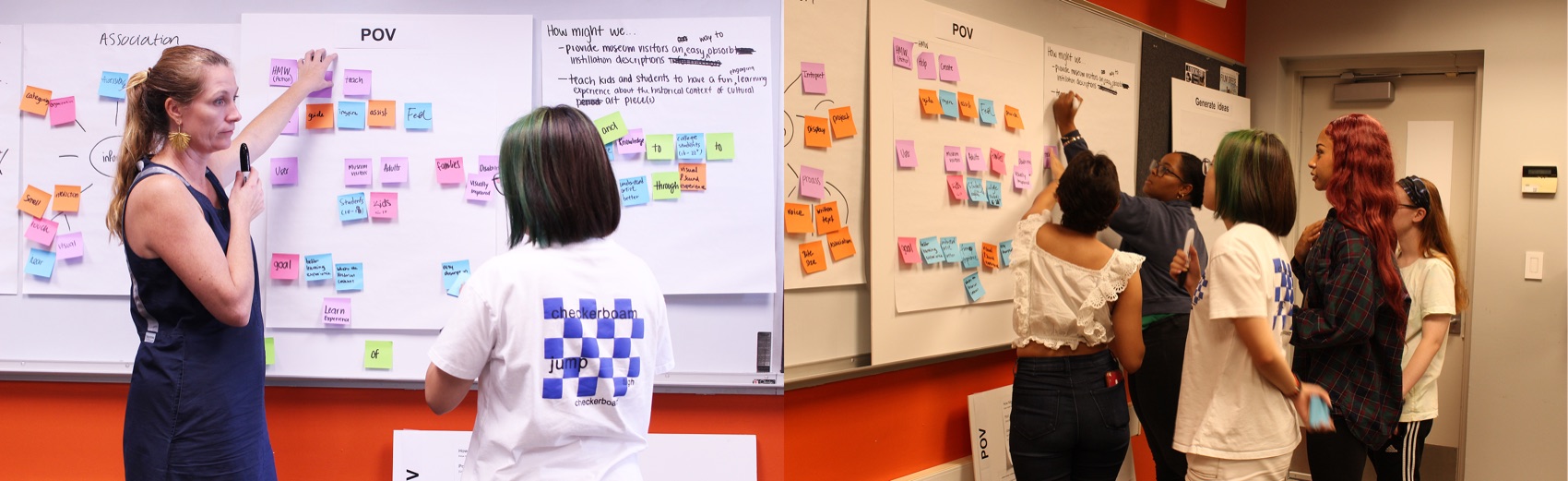
Then we took it all back to the wall. We pinned up what we’d seen, argued over it, and slowly sorted a museum’s worth of observations down to one group we couldn’t stop noticing: the kids.
02 – The insight
The kids weren’t bored. They were busy.
Children ran. They invented games on the gallery floor. They made up wild stories about the paintings. They were playingin a building that had no game for them to play. The learning wasn’t failing because kids didn’t care, it was failing because nothing in the room ever asked them to look.
They were already playing. The exhibit just wasn’t invited into the game.
03 – Area of focus
A totem pole with nothing to say for itself
In the Native American Tribal Art section stood a totem pole, tall, carved, stacked figure on figure, and almost completely silent. No story about the artist. No word on how it was carved, or what each creature meant. A child could stand right in front of it and walk away knowing nothing. That silence became my real brief.
The problem, stated plainly
Kids at the Lowe encounter art from cultures, places and eras they’ve never met, but the context lives in dense wall text, far from the piece, written for adults. So the background never lands. Standing in front of the totem pole, a child gets the shape of it and none of the story.
04 – The idea
What if the only way to win was to really look?
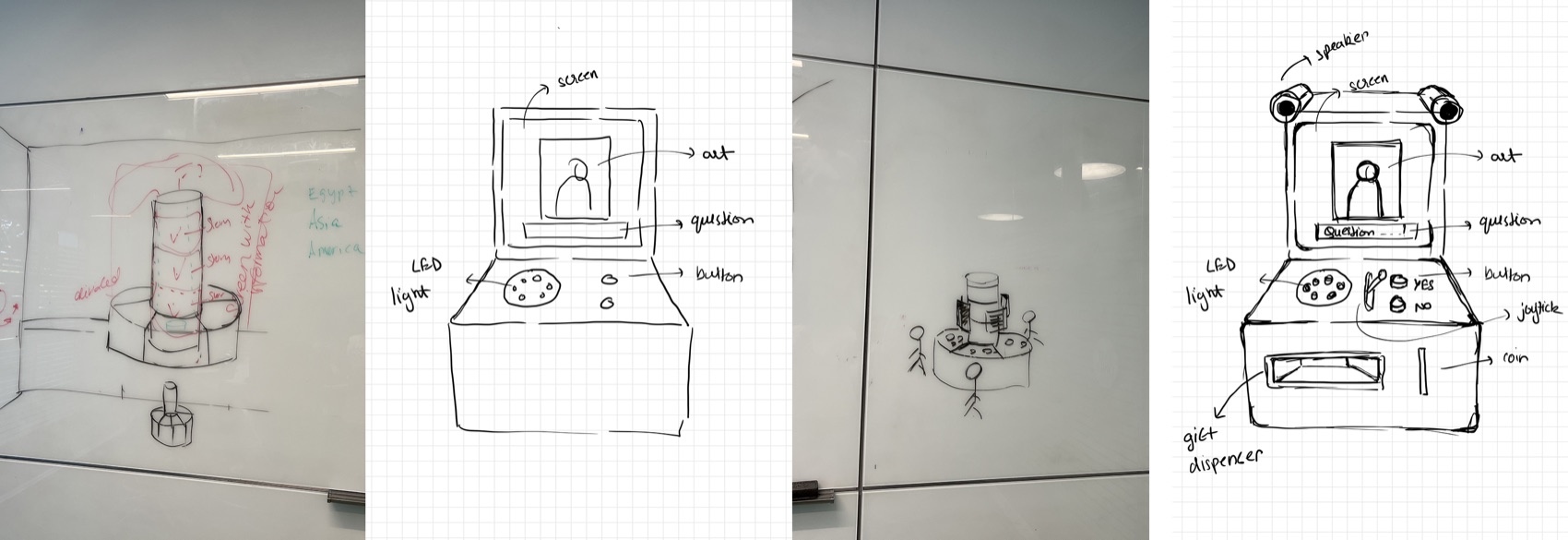
Everyone on the project broke off to develop their own concept. Mine was a vintage arcade cabinet that lives in the same room as the pole. To play, you can’t stay glued to the screen, you have to turn around, study the real totem, and rebuild it inside the game. The exhibit becomes the answer key. Looking becomes the mechanic.
What a kid actually wants to know
I wrote the requirements in the voice of the player I was designing for, a 7-to-13-year-old standing in front of something they don’t understand yet:
- “Who carved this, and why did they make it?”
- “Where did it come from, what place, what people?”
- “What does each figure in the stack actually mean?”
- “How was something this big and this old even made?”
- “Can I touch it, move it, play with it, somehow?”
05 – The prototype
Built the analog way: cardboard, paint, patience
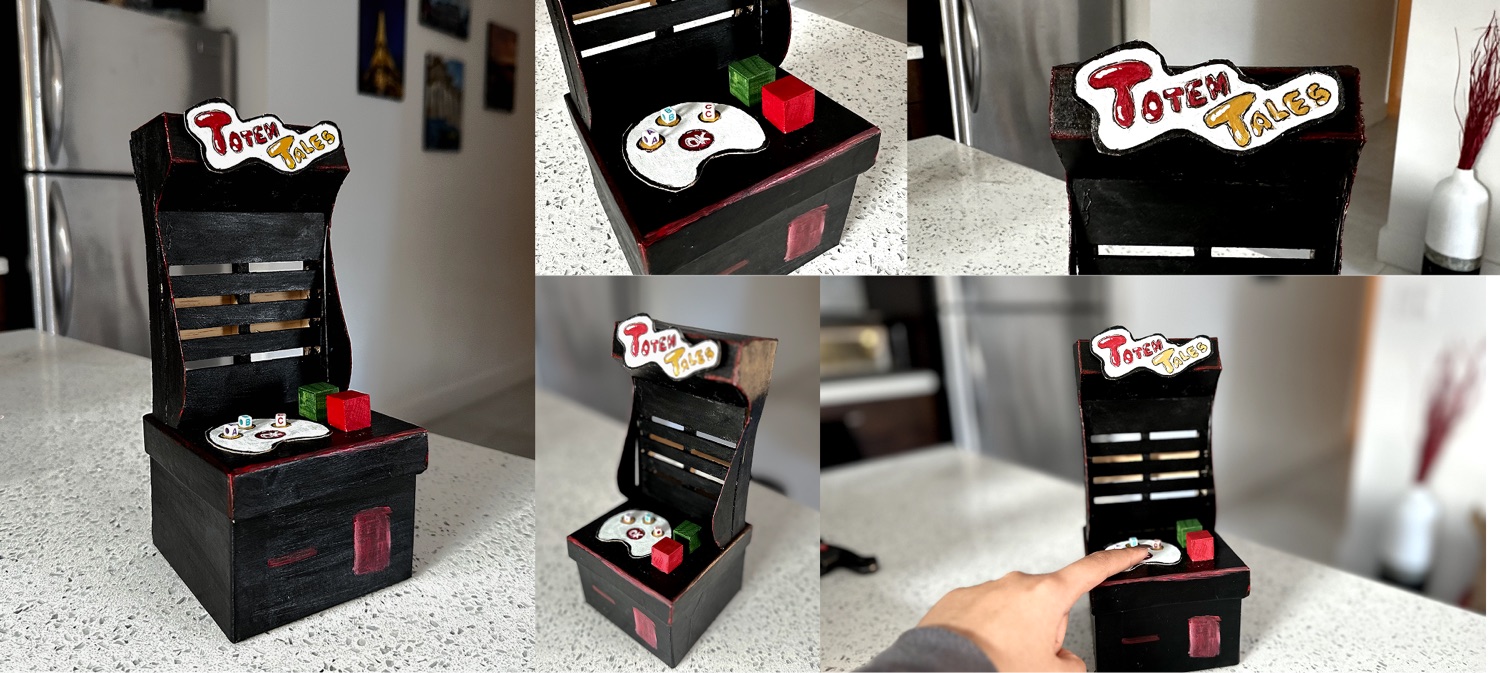
I made it by hand. A full cardboard arcade cabinet, painted in loud, contrasting colors chosen to pull a child clear across the gallery. Dummy buttons stood in for the real controls so I could show how it would feel to play. It had to look like something you were allowed to walk up and press, the opposite of a velvet rope.
06 – The game
Totem Tales, the game itself
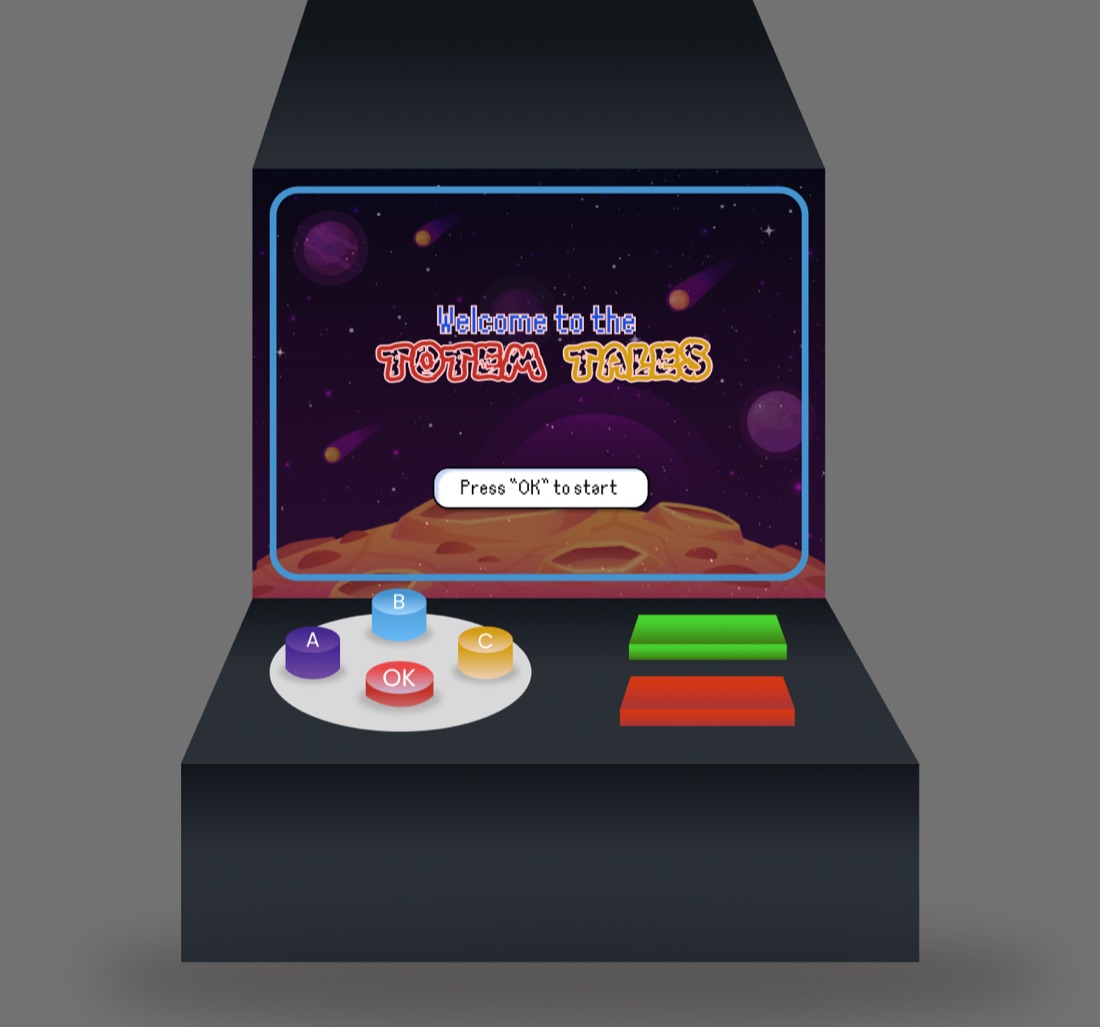
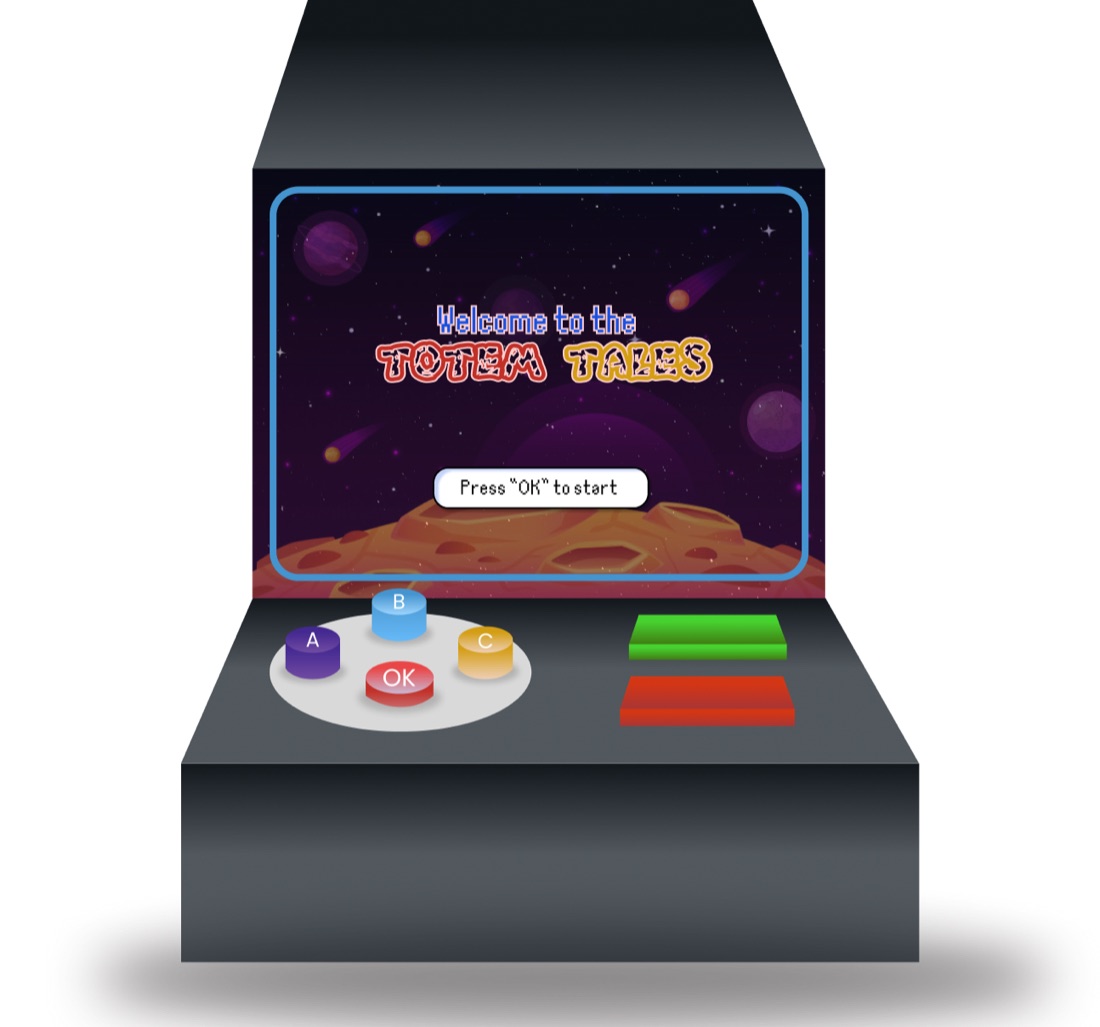
Totem Tales wears a vintage-arcade skin on purpose, the cabinet, the chunky buttons, the pixel type, all of it designed to read as playthe second a kid sees it. The first round can’t be won at the screen: you have to look at the real totem pole and arrange its figures in the right order inside the game. Only once you’ve genuinely paid attention does it move on.
Then it turns into trivia, one section of the pole at a time, teaching the history and meaning of each figure as you go. The reward for looking closely is a story you get to keep.
How to play
Everything happens on a physical control panel. On the right, two big buttons for the yes / no calls. On the left, three choices, A, B, C, and an OK to lock your answer in. Big targets, no instructions needed, the kind of controls a kid understands with their hands before they read a single word.
07 – Interactive prototype
Alongside the cabinet I built a clickable prototype of the game itself, so you could feel the whole loop without any cardboard at all: look, arrange the totem, answer, learn, repeat. It’s the version that proves the idea holds up as an actual thing you play, not just a thing you describe.
08 – Looking back
Totem Tales never shipped. It was cardboard, paint and a class deadline. But it’s the first thing I ever designed for attentioninstead of a screen, the first time I asked an interface to do something quietly radical: point a kid back at the real thing in the room. Years later I still think it’s the most honest brief I’ve had, make someone want to look.
the exhibit was always interesting. it just needed someone to press start.